

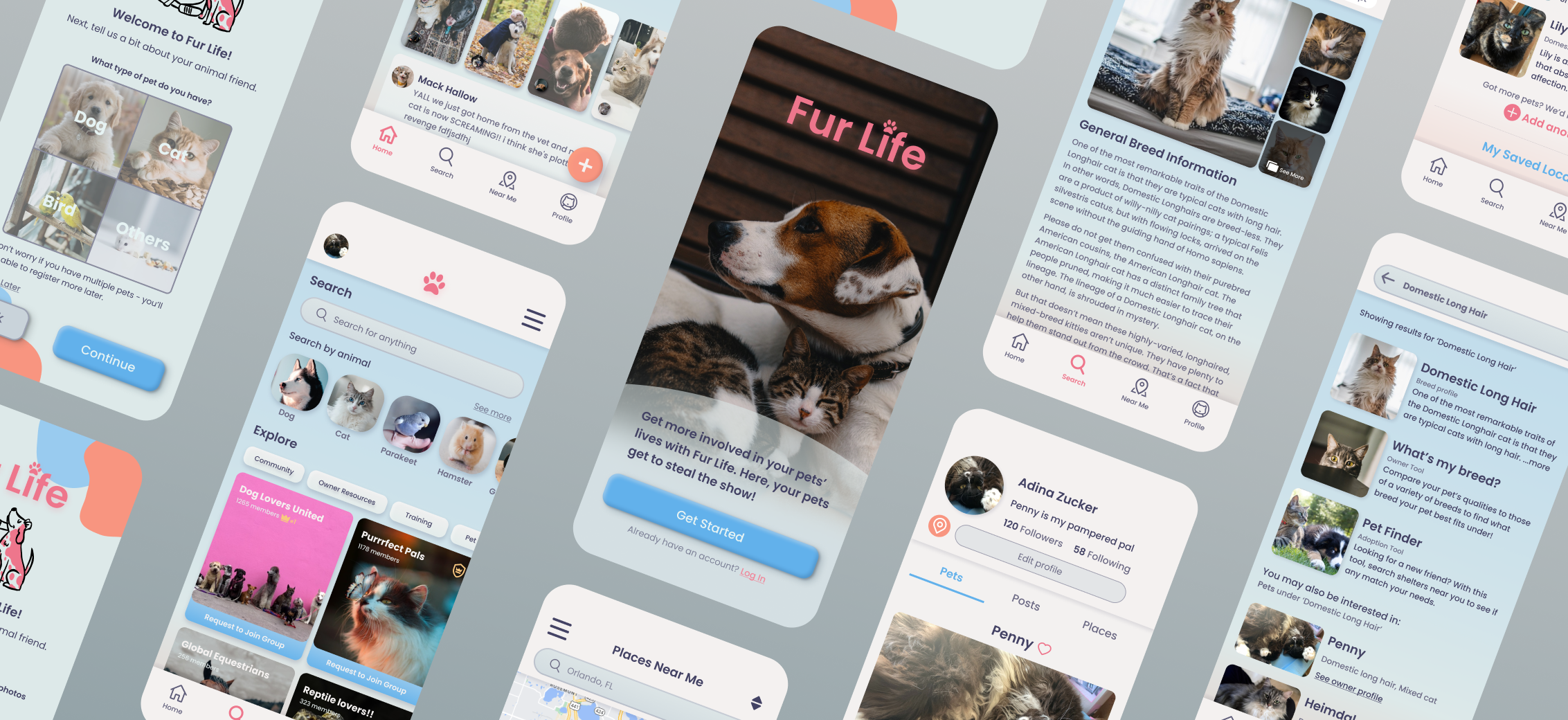
I conducted less formal, personal interviews with a handful of pet owners or potential pet owners. While there was a variety of reactions to the proposition of an animal-based community, there were a handful of commonalities between a majority of the interviewed participants.
Working from home has definitely changed the game for pet and owner relationships, but now that things are getting back in person, users are finding less time to spend on their community and pets.
Most information hubs require the user to scroll through the basic and general breed information in order to get to the deeper care- and health-related information. An easy way to skip right to the section that is needed will help save people's time.
Platforms such as Twitter, Facebook, and Reddit have areas that can be used for appreciating and seeking information on pets and animal care, but the entire premise falls short as these are within specific group or categorical bounds.
Users aren't sure whether the information they come across is entirely accurate, given that they go to lengths and different sources in order to find the necessary information directly. Gathering from trusted sources with proper credit is a must.
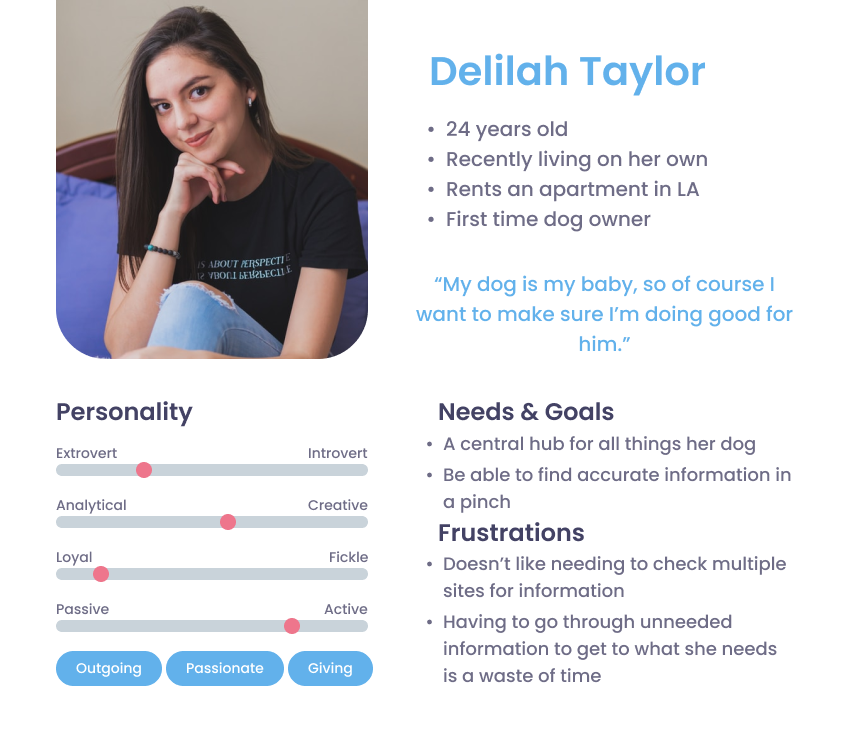
This user persona was synthesized from the information gathered to create a reference when designing.
I created user flows for the most commonly found user intentions:
1. User wants to find information on pet care or pet-friendly locations.
2. User wants to be social, and optimize their found community.
Based on the established pain points, I began sketching some options that would hope to optimize user experience, while also being considerate of users' time and the steps necessary for progressing through the app to complete goals. During the initial thoughts in the design process, I referred heavily to the target audience summarized by the user persona, and stuck to what is already known with common design patterns found in other social networking platforms. First and foremost, my goal was to make the layout the most intuitive it could be, while also retaining appeal in the visual design of the UI.
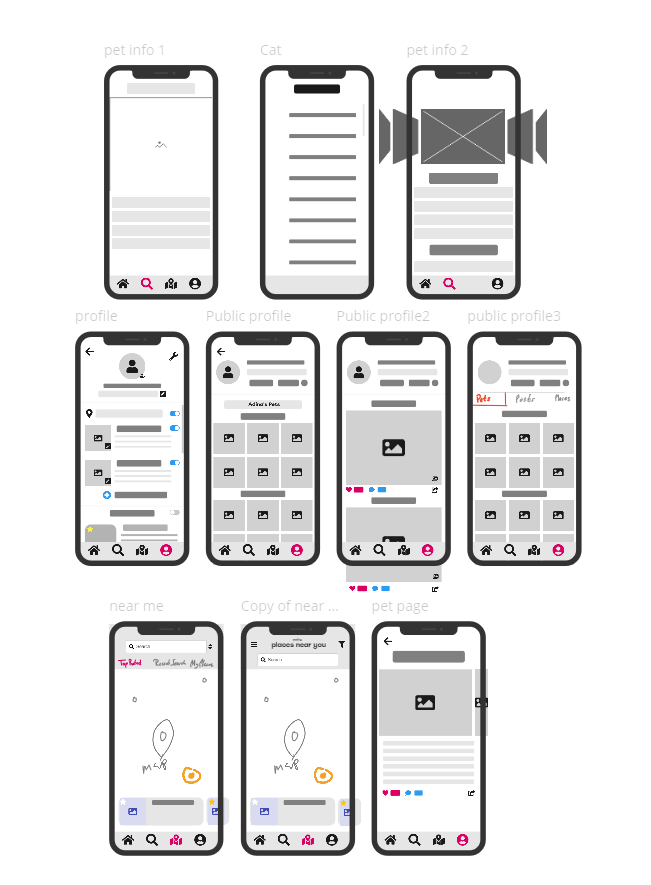
Continuing from my paper sketches, were low-mid fidelity wireframes which I created in Miro. While the paper sketches were very quick and easy to get basic ideas down from the start, these wireframes were used to broaden aspects of certain pages which were easier for me to visualize in fuller blocks that wireframing provides. The addition of shades and colour to specify page selections as well as placeholder images allowed me to further visualize what would be the best solutions to the users' frustrations at their destination pages, such as pet information pages and profiles for socialization.
Moving into the final steps of my design process, I turned the most straight-forward iterations from the previous stages into a high fidelity mock up using Figma. Some adjustments were made in the process, but the intent for each screen remained.
All copy found in the prototype was written by me, with the exception of the Domestic Long Hair breed page, which content I credit to petkeen.com and aspcapetinsurance.com to retain formal accuracy.
Link to interactive prototype
Using Maze.co for usability testing on my prototype, I gathered a handful of pet owners, as well as people who have expressed wanting pets, and asked them to go through the flows for Sign Up, Search for Pet Information, Exploring the Near Me Page and Profile, and finally Free Roam of the App. For closing thoughts, I asked them what their overall thoughts for the app were, if there was anything they wished they could have done but didn't have the chance, and would this be something they could see themselves using.
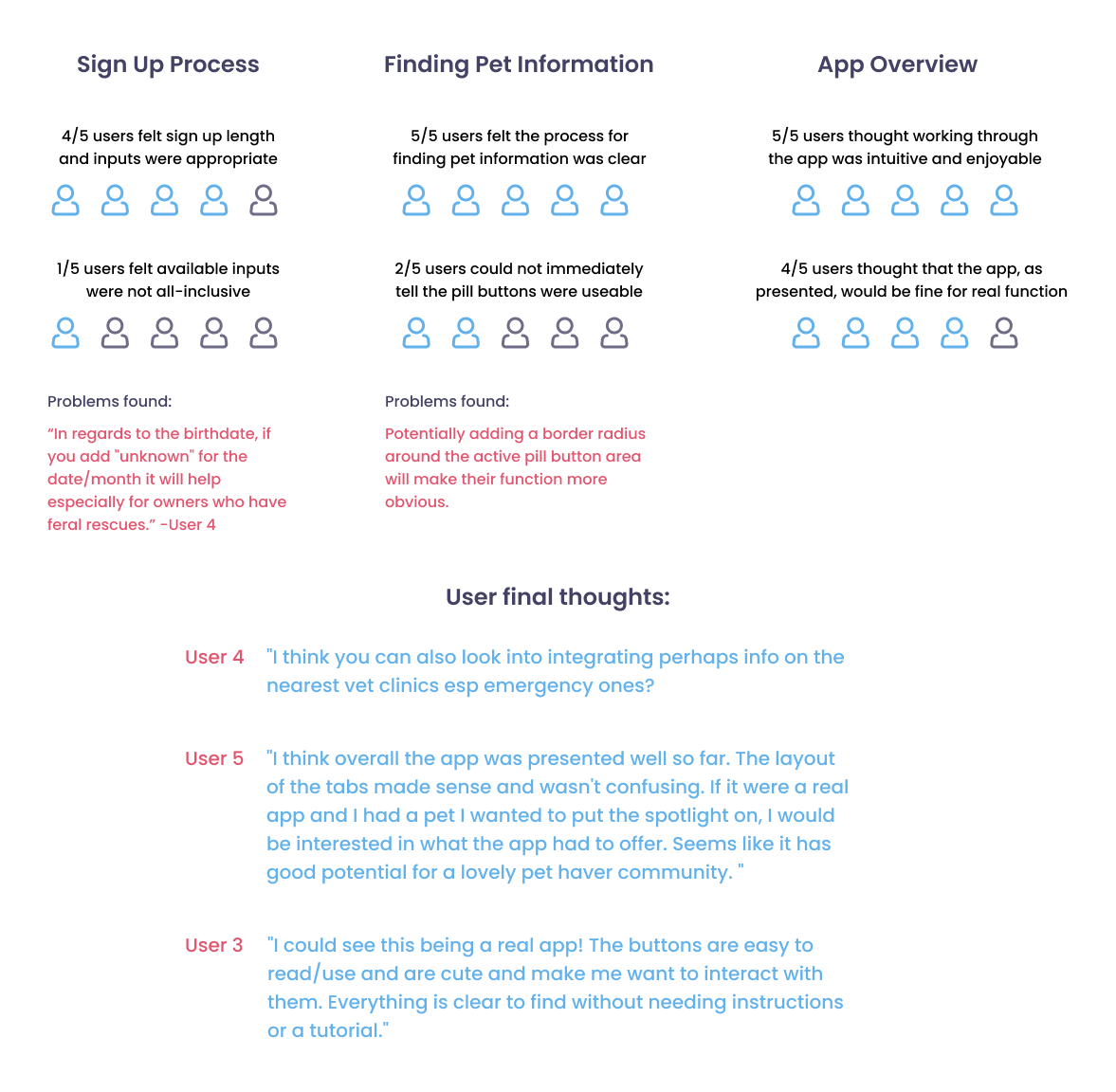
With this being my first case study, I went into it with a handful of unknowns, but I was excited at the prospect of creating a product for a community of people with common interests to find and love. Seeing my work come together and my testers validating my assumptions and design work was very rewarding, and I look forward to creating more UX projects in the future, and implementing them into real products for users to bring into their lives.
For my next projects, I definitely will keep users involved in every step of the way. Being a self-taught ux designer, it was difficult initially for me to know how to reach out to users for interviews and testing, but getting past that hurdle is what alleviates so many questions throughout the process and brings the product to life. From here, my goal will to be to expand my reach into different user demographics from this one to create other products with the potential to impact more lives than just an animal-centric product could reach.
If you like what you see and want to work together, get in touch!
adinazucker0@gmail.com